
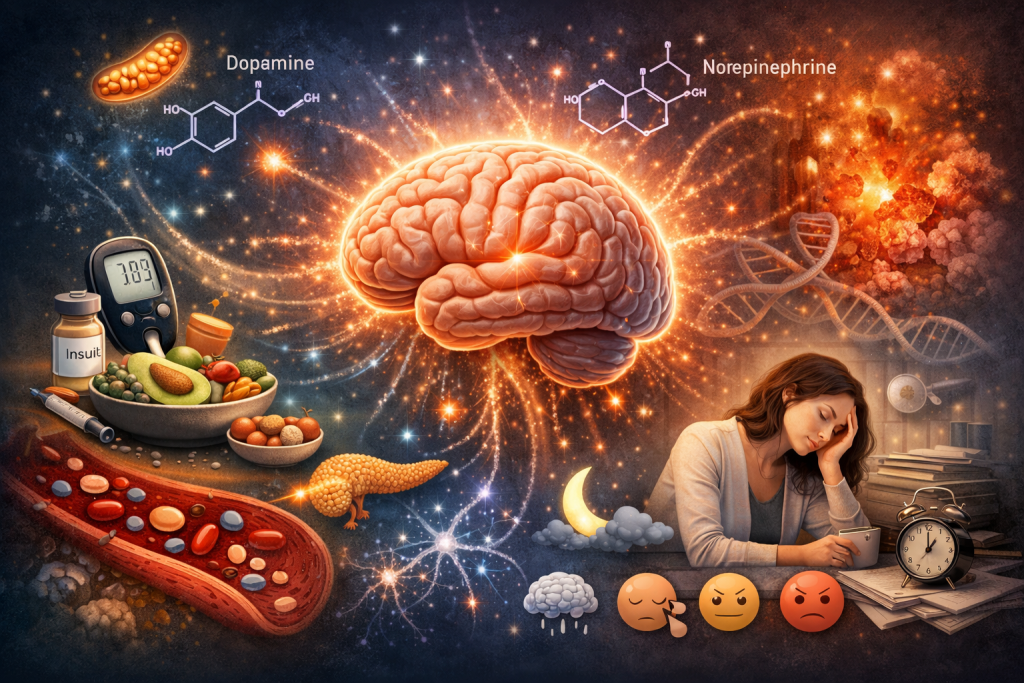
When people think about brain health, they often think about neurotransmitters. They think about serotonin, dopamine, and norepinephrine. What is frequently overlooked is something far more foundational: metabolism.
The brain is one of the most metabolically demanding organs in the body. Although it represents only a small percentage of total body weight, it consumes large amounts of energy. It’s metabolismdepends on stable blood sugar, effective insulin signaling, and balanced inflammatory responses to function properly. When these systems are unstable, cognitive symptoms are often the first sign.
The Brain Is an Energy-Dependent Organ
Every thought, memory, and emotional response requires energy. The brain does not store significant fuel reserves. It relies on a steady and regulated supply of energy substrates. When blood sugar fluctuates dramatically or insulin signaling becomes impaired, the brain experiences energy stress.
Energy stress does not always look dramatic. It may present as:
- Brain fog
- Difficulty concentrating
- Irritability
- Mood swings
- Afternoon crashes
- Poor short-term memory
- Sleep disturbances
These symptoms are often attributed to stress, aging, or personality. In many cases, they reflect metabolic instability.
Insulin Is Not Just About Diabetes
Insulin is commonly associated with blood sugar and diabetes, but its role in the brain is equally important. Insulin influences how brain cells utilize glucose. It affects neurotransmitter regulation, synaptic plasticity, and inflammatory signaling. When insulin signaling becomes dysregulated, brain cells become less efficient at energy regulation. Over time, this contributes to cognitive fatigue and reduced resilience. This is one reason metabolic dysfunction is increasingly associated with cognitive decline.
Inflammation and Cognitive Stress:
Inflammation is a protective response. In the short term, it supports healing and defense. In the long term, when inflammation becomes chronic and unresolved, it alters brain function.
Low-grade systemic inflammation can affect the brain by:
- Disrupting neurotransmitter balance
- Increasing oxidative stress
- Impairing mitochondrial function
- Altering sleep architecture
- Heightening anxiety and irritability
Chronic inflammatory signaling shifts the brain into a protective state. In that state, clarity and creativity are not prioritized. Survival is.
Why Cognitive Symptoms Often Precede Diagnosis
It is common for patients to experience cognitive symptoms up to 20 years before any formal diagnosis appears. They may be told their labs are normal. Imaging may not show structural abnormalities. Yet they feel different. The reason is simple. Function changes before structure does. Metabolic stress and inflammation can impair function long before measurable degeneration occurs. By the time structural changes appear, dysfunction has often been present for years. This is why early attention to metabolic health is not optional. It is preventative.
The Role of Stabilizing Blood Sugar
One of the most immediate ways to support cognitive repair is stabilizing blood sugar.
Rapid glucose spikes followed by crashes place stress on the brain. They increase inflammatory signaling and activate stress hormones. Stable blood sugar allows the brain to maintain consistent energy output. This reduces irritability, improves focus, and enhances resilience. Metabolic stability is not about extreme dieting. It is about reducing volatility and restoring flexibility.
Reducing Inflammatory Load:
Addressing inflammation requires more than anti-inflammatory supplements.
It requires examining:
- Dietary patterns
- Sleep quality
- Chronic stress
- Environmental load
- Gut integrity
- Nervous system tone
Inflammation is rarely isolated. It is usually part of a broader pattern of overload. When metabolic stress is reduced and nervous system regulation improves, inflammatory signaling often decreases naturally.
Cognitive Repair Requires Metabolic Repair
Cognitive repair is not achieved by stimulating the brain. It is achieved by restoring the biological conditions that allow the brain to function efficiently. When insulin signaling improves and inflammation decreases, the brain often becomes clearer without force. Patients frequently describe this shift as feeling clear or like themselves again.
A Closing Reflection
The brain is not separate from the body. If metabolism is unstable, cognition will reflect it. If inflammation is chronic, clarity will diminish. At Clear Mind Integrative Health, we do not treat the brain in isolation. We address the terrain that supports it. When energy stabilizes and inflammation quiets, the brain often regains its natural capacity. Clarity is not something we manufacture. It is something we restore.
